
Playing Doubles: Why 2026 U.S. Open Advertisers Expanded Their Media Mix
September 22, 2026
Another U.S. Open is in the books and as usual, advertisers showed up big in real life for New York City’s largest sporting event. Between the ever-popular Fan Week and the long journey from Manhattan to Billie Jean King National Tennis Center, brands had lots of opportunities to connect with fans.
More IRL Media Formats, Better Results
There was one tactic we saw quite a few advertisers use throughout the tournament, and it’s a good one: combining multiple IRL media formats in a single campaign. Some paired billboards with transit. Others stacked impressions across digital and static transit formats. But whatever the media mix looked like, the key word was mix. And here’s why.
Campaigns that use more than one IRL media format see stronger ROI. Adding a second format drives a 20% increase. Three-format campaigns perform 26% better. IRL media campaigns that combine four formats see a return on investment 30% higher than those that use just one (SOURCE: Analytic Partners). Multiple media formats keep a campaign fresher longer, offer expanded opportunities for storytelling, and deliver frequency and increased engagement across consumers’ daily journeys.
How to Own the Journey
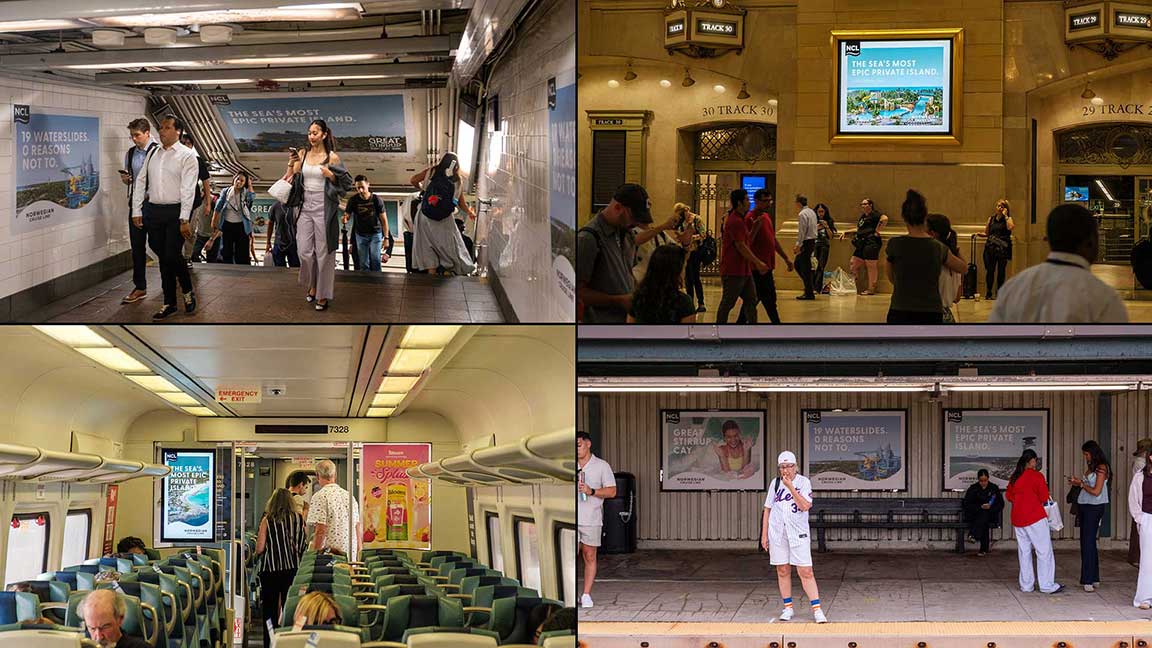
For those whose daily journey took them to the U.S. Open from midtown Manhattan, Norwegian Cruise Line was a brand that was hard to miss. Not only did they execute an immersive, multi-format Station Domination at Grand Central-42nd Street, where tennis fans got on the 7 train, and at Mets-Willets Point Station, where they got off. Norwegian’s campaign traveled even further on commuter rail formats such as Digital Dioramas in the heart of Grand Central and Digital Livecards inside Long Island Rail Road trains.
Traditional Billboards, Classic Luxury
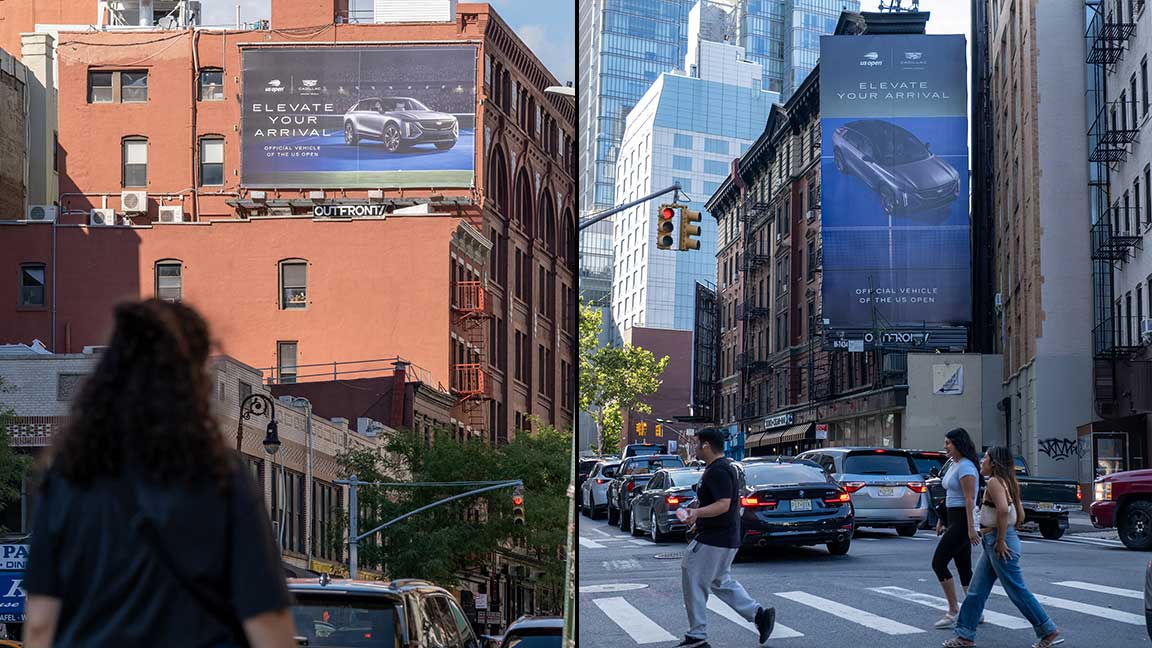
Cadillac is a brand practically synonymous with luxury. It’s no surprise then that General Motors focused on two of New York’s most in-demand and affluent neighborhoods. The brand went all-analog for this campaign, claiming 100% share of voice on a wallscape in NoLita and on a full-sized vertical billboard in the heart of SoHo. The “Official Car of the U.S. Open” was just one of the brands that used IRL media to get more value out of their official sponsorships.
Beverage Brands Showed Up Above Ground and Below
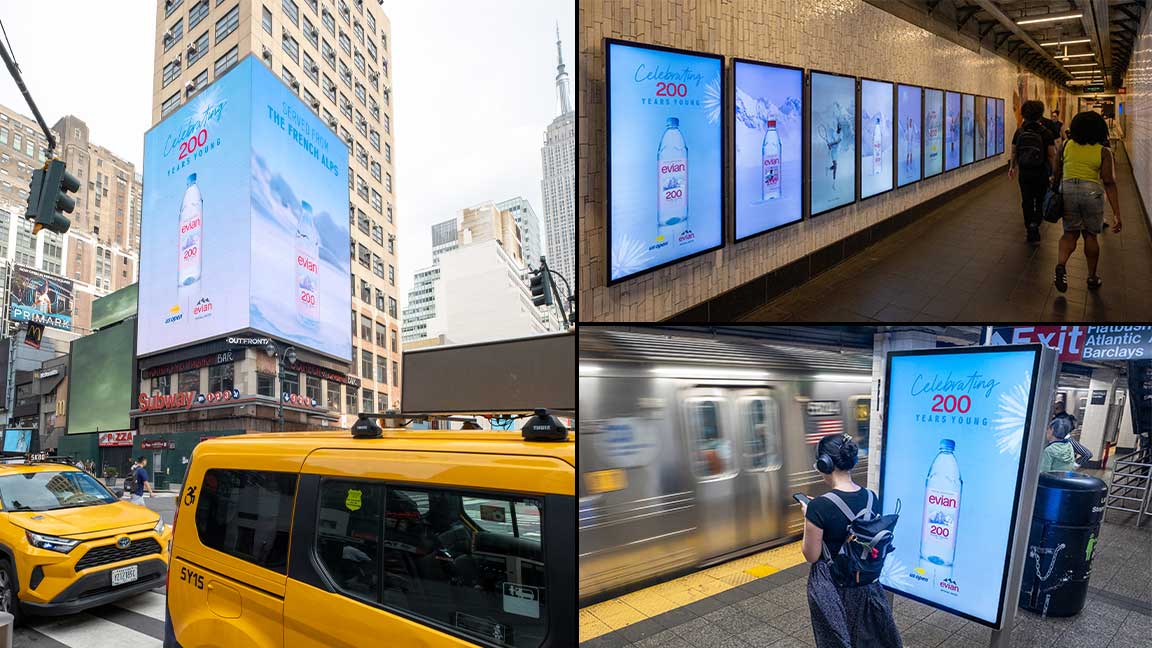
Evian’s all-digital campaign spanned both transit and billboard media, promoting its 200th anniversary and official U.S. Open sponsorship on individual Liveboards, an 11-screen Livescape, and our massive two-sided wallscape just outside Penn Station.
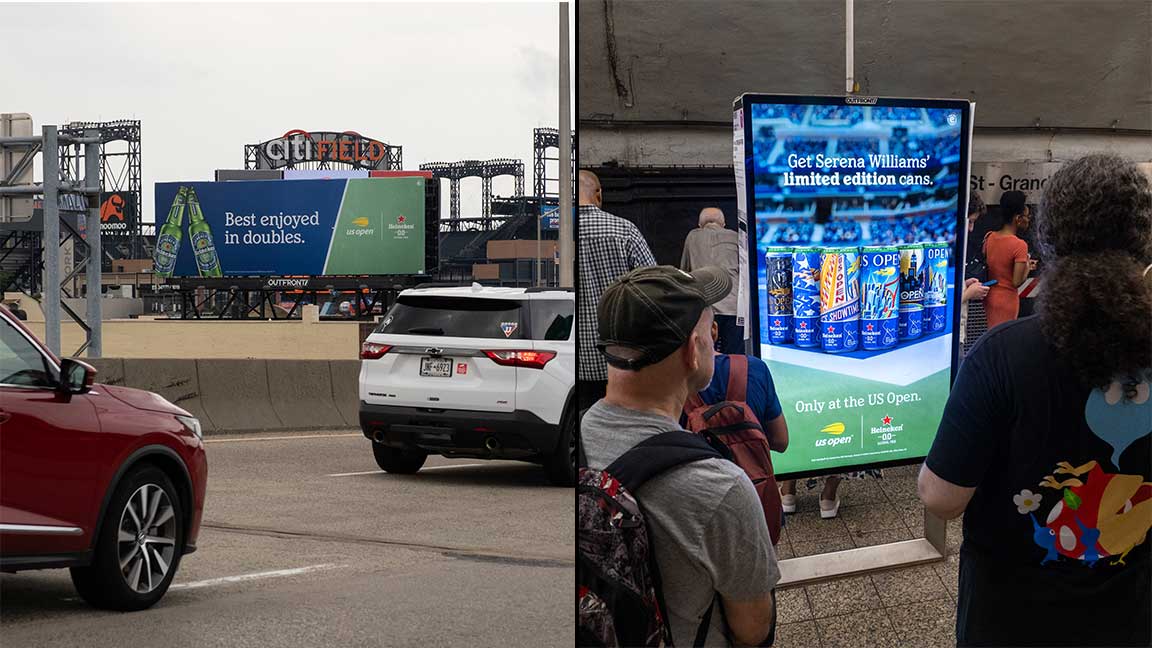
Heineken also combined billboard and transit. With a billboard, alongside Grand Central Parkway, promoted its 0.0 non-alcoholic brew to those who drove to the tournament. Meanwhile, on its Subway Liveboards, the creative showcased six limited edition cans, each celebrating one of Serena Williams’ tournament wins.
Speaking of Serena Williams…
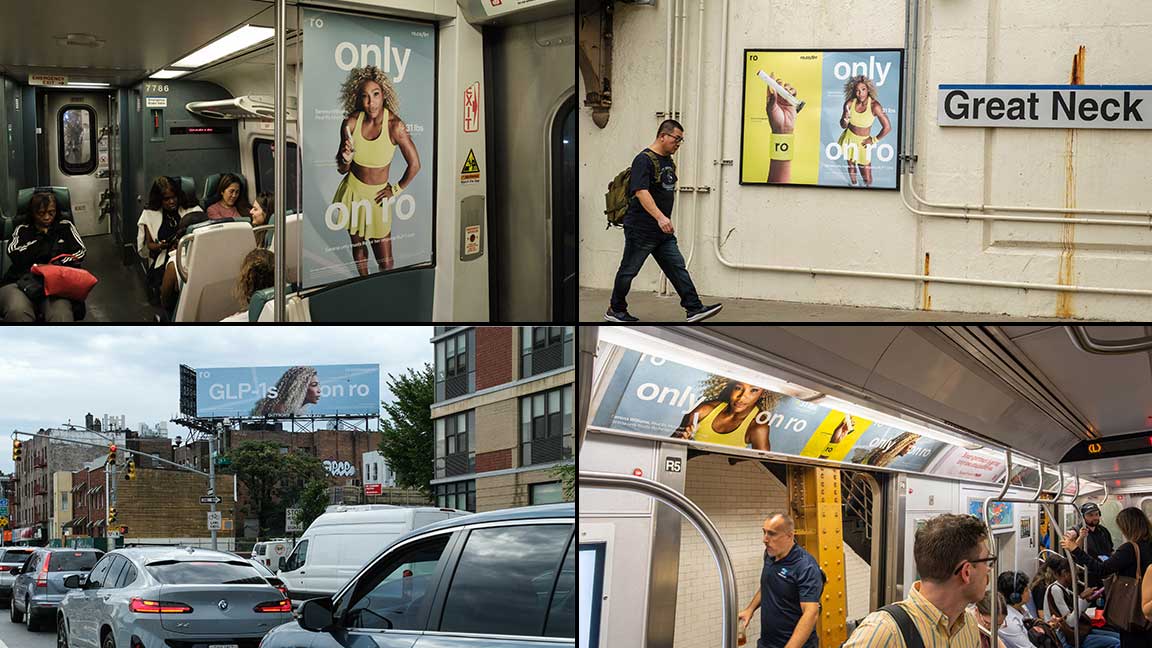
The women who compete at the U.S. Open were probably much happier to see Serena Williams in an ad than on the court. And they got to see her plenty. In addition to Heineken, she also starred in a campaign for GLP-1 provider Ro, which has helped her lose 31 pounds. With the hopes of inspiring others, the brand featured the champ inside Subways and commuter rail cars, via two-sheet posters on LIRR platforms, and on a billboard.
These Campaigns Had Some Balls
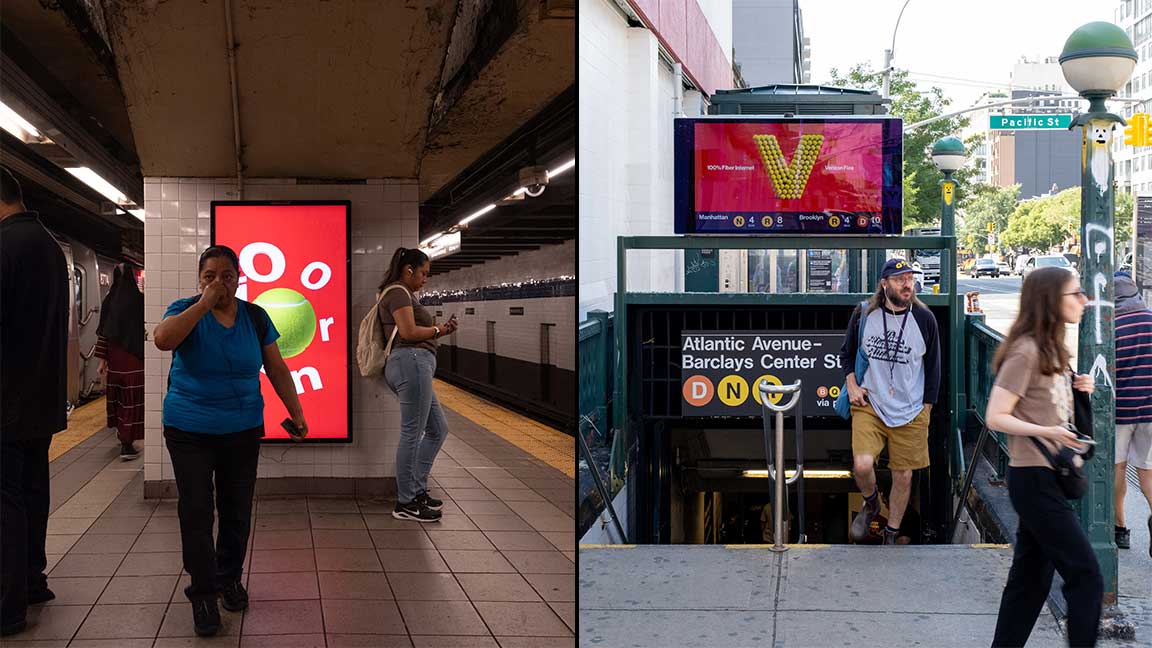
You don’t need to be an official sponsor of the U.S. Open to connect in real life with tennis fans. All you need is balls. That was Verizon’s thinking, anyway, for a playful, contextually relevant campaign that combined its distinctive brand color with tennis ball-themed creative on Digital Urban Panels at street level and Liveboards on Subway platforms.
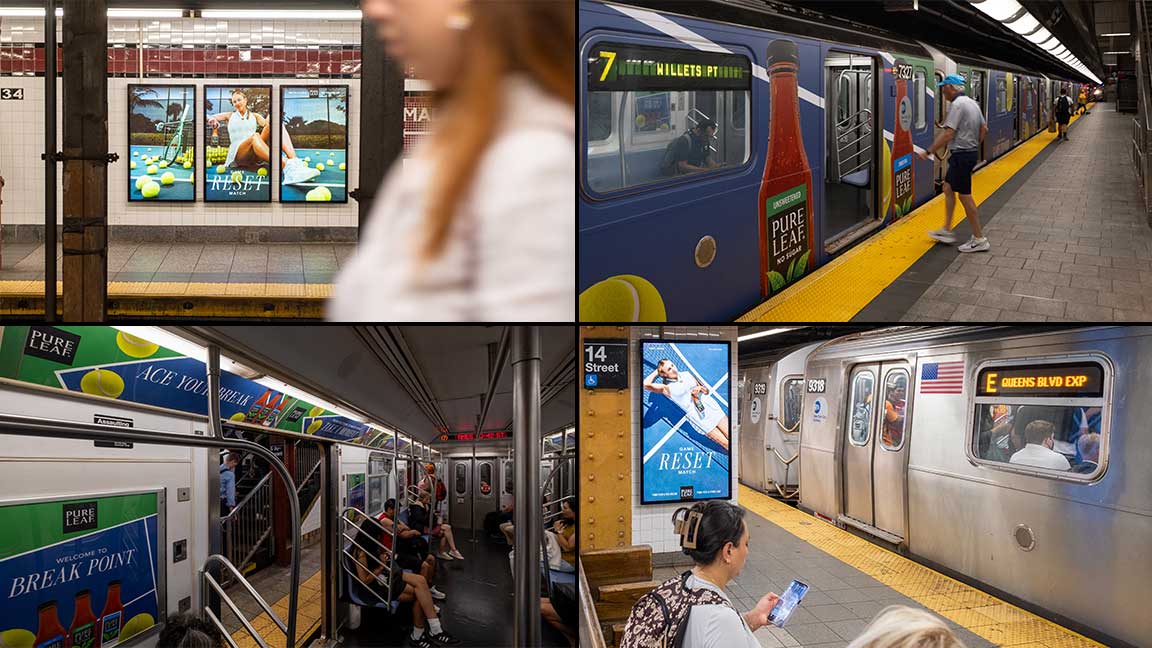
Another brand that created connection not through official sponsorship but contextual relevance was Pure Leaf. The iced tea brand’s creative featured tennis pro Amanda Anisimova, who took an eight-month hiatus to focus on her mental health and subsequently returned to top 10 status. “We’re bringing the message of her inspiring comeback to life by leveraging Amanda not just as a spokesperson, but as someone who really reflects and embodies the message of our Tea Break campaign,” said VP and GM of Pepsi Lipton Partnership North America, Zach Harris. In addition to a full wrap outside a 7 train and with a brand train interior, the campaign also ran digitally on individual liveboards and triptychs. Pure Leaf also hosted a Tea Break Cart brand activation near Bryant Park. There, fans could enjoy Pure Leaf mocktails and score free merch.
It Wouldn’t Be the U.S. Open Without a Honey Deuce
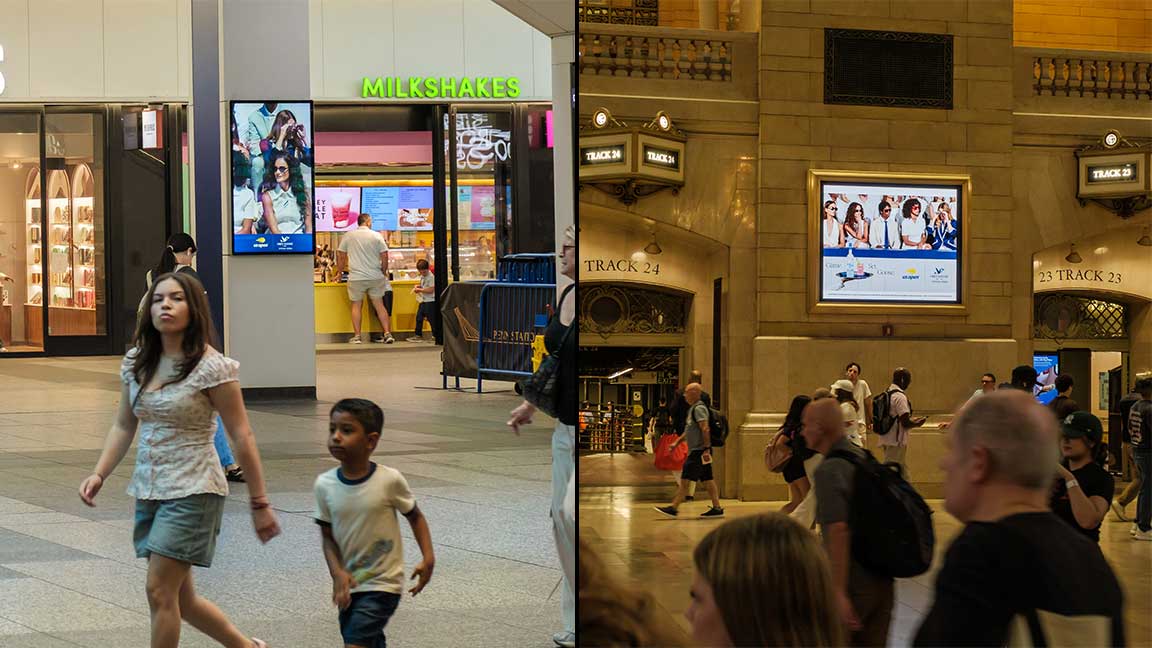
Finally, Grey Goose. It’s more than just a tournament sponsor. It’s also the key ingredient in the Honey Deuce, the signature cocktail of the U.S. Open. Combine 1 ¼ oz. of vodka, 3 oz. of fresh lemonade, and ½ oz. of premium raspberry liqueur, garnish it with three honeydew melon balls on a skewer, and enjoy! The media mix for this campaign included Digital Liveboards at Penn Station and Grand Central Madison and Digital Dioramas at Grand Central Terminal.
That’s all for this year! But it’s never too soon to start planning your brand’s next big impact. Contact OUTFRONT today and let’s get started.
Author: Jay Fenster, Sr. Manager, Marketing Content @ OUTFRONT
Links to third-party content are not endorsed by OUTFRONT Media. Past performance may not be indicative of future results. OUTFRONT does not guarantee specific results or outcomes.
Relevant OOH Content Straight To Your Inbox
Essential out of home insights, trends, and success stories. Delivered weekly.
Related Stories
See More Stories
OUTFRONT and the New York Jets Just Made Official Sponsorships Even Sweeter. Here’s How.
Winning in Three Sets: These Brands Made Points IRL at the US Open
Game, Set, Match: These OOH Advertisers Just Aced the US Open

Here's the Tea: How British Airways Turned a Train into a Plane