The Post-Game Show: How Super Bowl Advertisers Shape Culture Year-Round In Real Life
February 10, 2026
The commanding performance of the Seattle Seahawks’ defense wasn’t the only thing people were talking about after Super Bowl LX. There was also Bad Bunny’s proud and joyous halftime performance, the shirtless fan getting chased down the field by Patriots wide receiver Kyle Willliams, and of course, the commercials.
Americans watch Super Bowl commercials the way we watch the Met Gala red carpet. We’re eager to see how brands get dressed up, what statements they choose to make when money is no object and they have the whole world’s attention.
We watch looking for something to talk about. We watch to be a part of something bigger for ourselves. We watch to be a part of the shared experience that is Super Bowl Sunday.
But what happens on Monday?
Brands can’t just show up one day a year any more than players can.
Fortunately, there’s a way to shape culture and connect communities year-round: it’s by creating brand experiences in real life built on out of home media.
Some of the Big Game’s most talked-about advertisers are already showing up big IRL. Here are some examples of how those brands are using our medium to launch, amplify, sustain, and convert.
Liquid I.V.’s Larger-Than-Life Relaunch
Take a look at Liquid I.V., the hydration aid brand whose rousing Super Bowl ad featured an anthemic Phil Collins ballad sung by a chorus of toilets. This is a brand that’s no stranger to getting attention in real life.
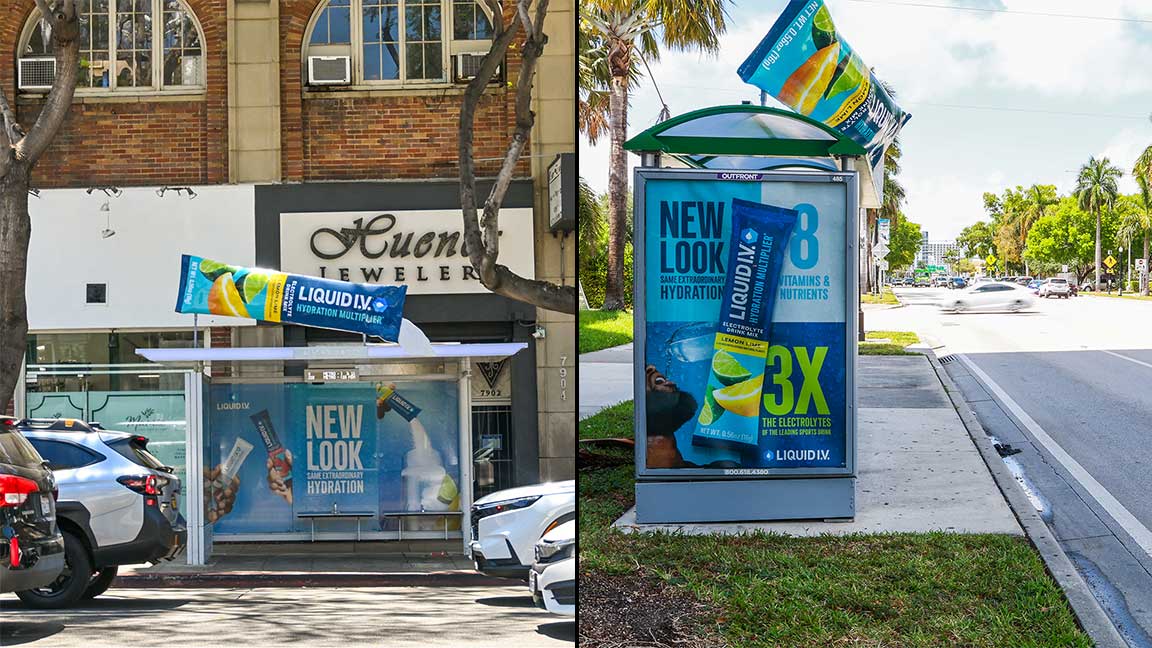
When relaunching its new-look packaging, our transit shelters in Los Angeles and Miami made Liquid I.V. come alive with oversized 3D prop versions of the product, the larger-than-life packet extending the ad above the canvas to seemingly pour powder into the shelter.
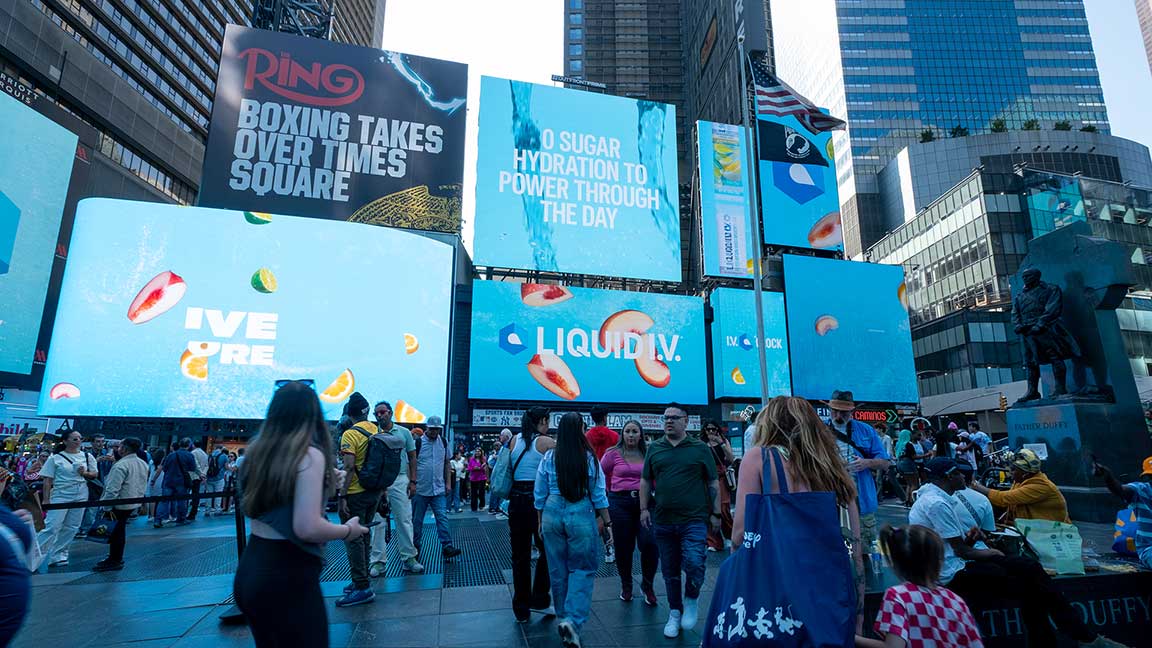
Last summer, Liquid I.V. took it a step further by creating an unforgettable IRL brand experience in the center of Times Square. I.V. O’Clock sought to fight the 4PM slump by combining a roadblock (the simultaneous takeover of every screen in the square) with a street team of 50 delivery robots that gave out free samples and branded reusable water bottles to passersby.
This activation quenched not only consumers’ literal thirst, but their thirst for brands to meet them where they are.
Lay’s Brand-Sustaining Tearjerker
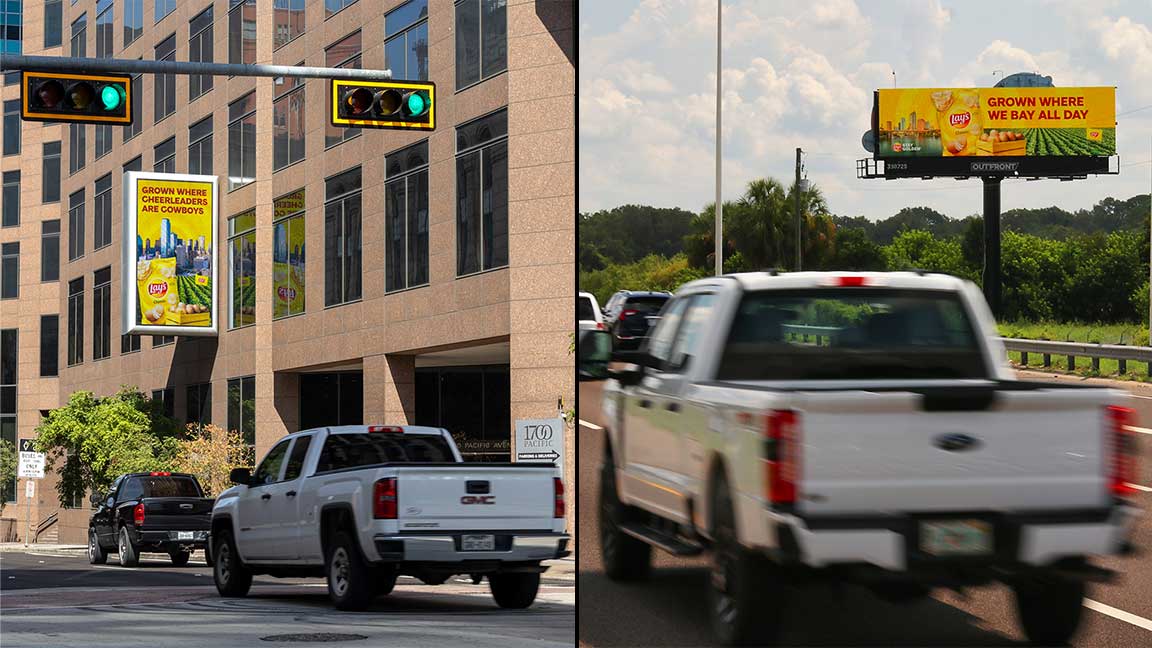
The second highest-rated Super Bowl ad this year was for Lay’s potato chips. It told an emotional story of family farmers in order to call attention to its potatoes – and the places and people that grow them.
To sustain a brand that’s been around since 1938, Lay’s reminds snack lovers of its roots, both figurative and literal. Like the Super Bowl spot, the billboard and transit elements of its brand campaign emphasize the real physical places where the potatoes come from. The ads seek to create an emotional connection by combining farm imagery with localized contextual relevance, all infused with the brand’s sunny yellow hue.
The Super Bowl tearjerker told a powerful story, its message dovetailing with IRL media placements to communicate a simple message focused on the quality of the product. When your goal is to sustain an 86-year-old brand built on potatoes, oil, and salt, sometimes that’s all you need.
Draft Kings Amplifies Its Live Betting Message
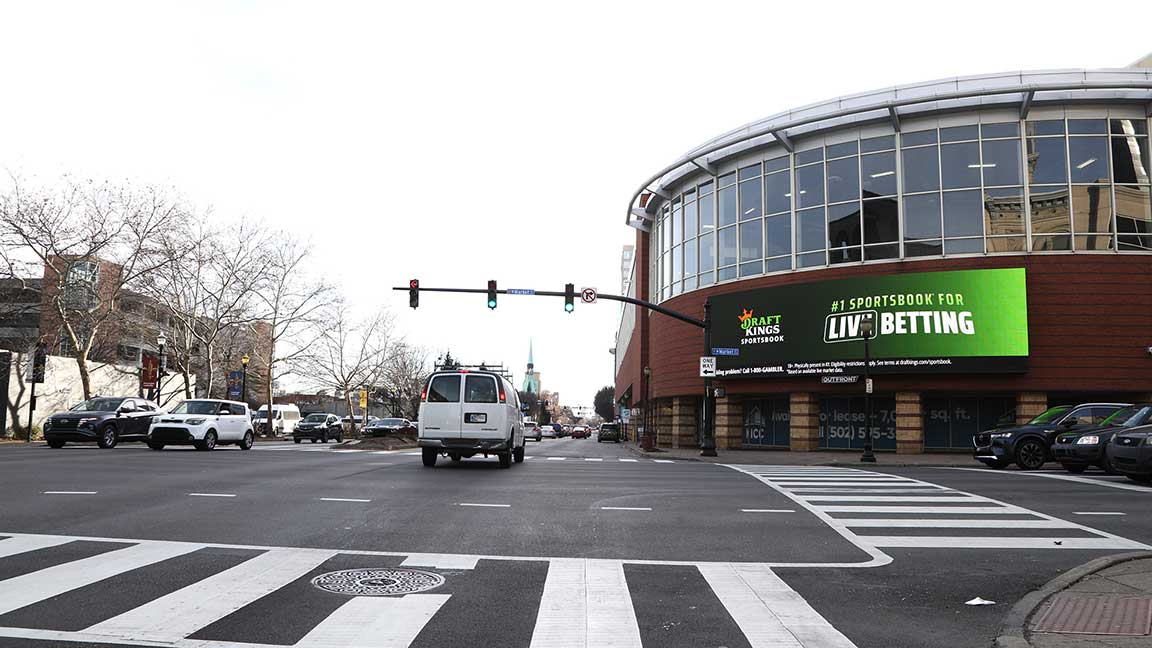
Colin Jost and Michael Che are used to doing it live. That’s why SNL’s Weekend Update anchors were tapped to deliver a blatantly pre-taped message on Super Bowl Sunday: that Draft Kings is the #1 sportsbook for live betting.
That’s the same message the brand is amplifying on our IRL media, and it’s no coincidence. Combining IRL and television is proven to supercharge the brand and business effects of a campaign, including a 61% lift in customer acquisition and a 34% increase in market share (SOURCE: Rapport/IPA Databank/Peter Field). And aligning the creative is proven to double brand recall (SOURCE: System1).
Ro Seeks to Change Lives, Convert Patients
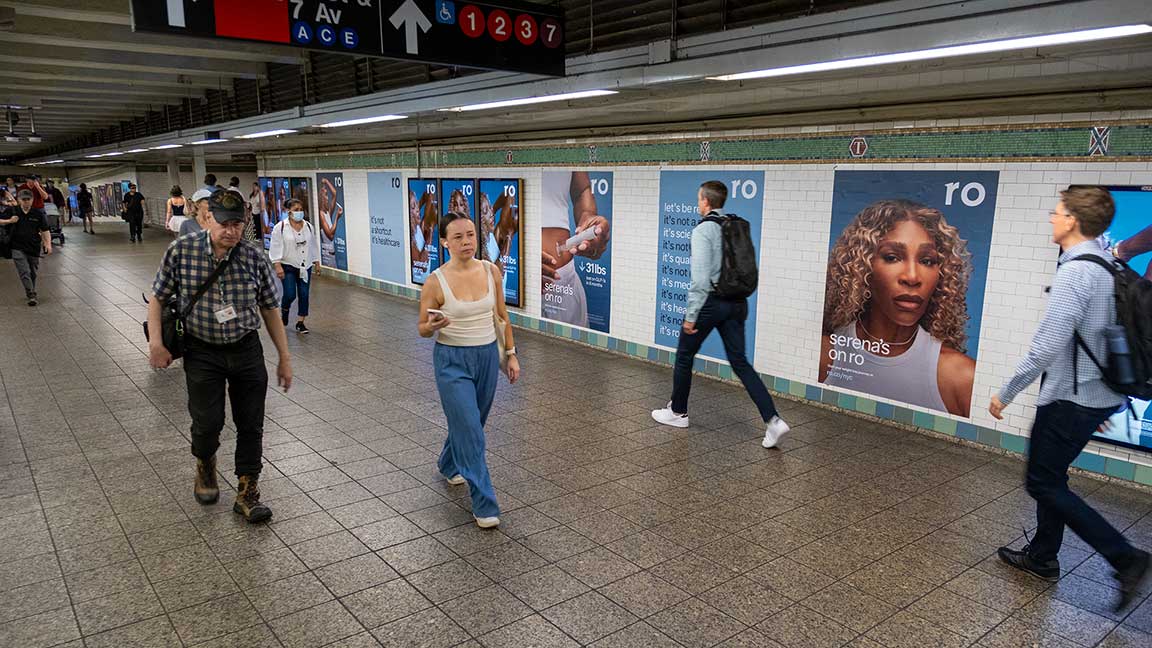
One in eight Americans now takes a GLP-1 drug for weight loss including Serena Williams (SOURCE: Gallup). The tennis star’s loss of 34 pounds in a year is the centerpiece of a Ro Super Bowl ad that builds on the controversial, conversation-sparking New York City Subway Station Domination Serena starred in for the brand this summer.
Ro used custom campaign-specific web URLs in each location where the ads ran. Measurement is critical for marketers and this is just one way that IRL practitioners can track the effectiveness of their advertising.
Besides this decidedly old-school tactic that can capture sales lift, IRL advertisers can also go the more high-tech route and measure their campaign’s impact on actual in-store visitation with a footfall study.
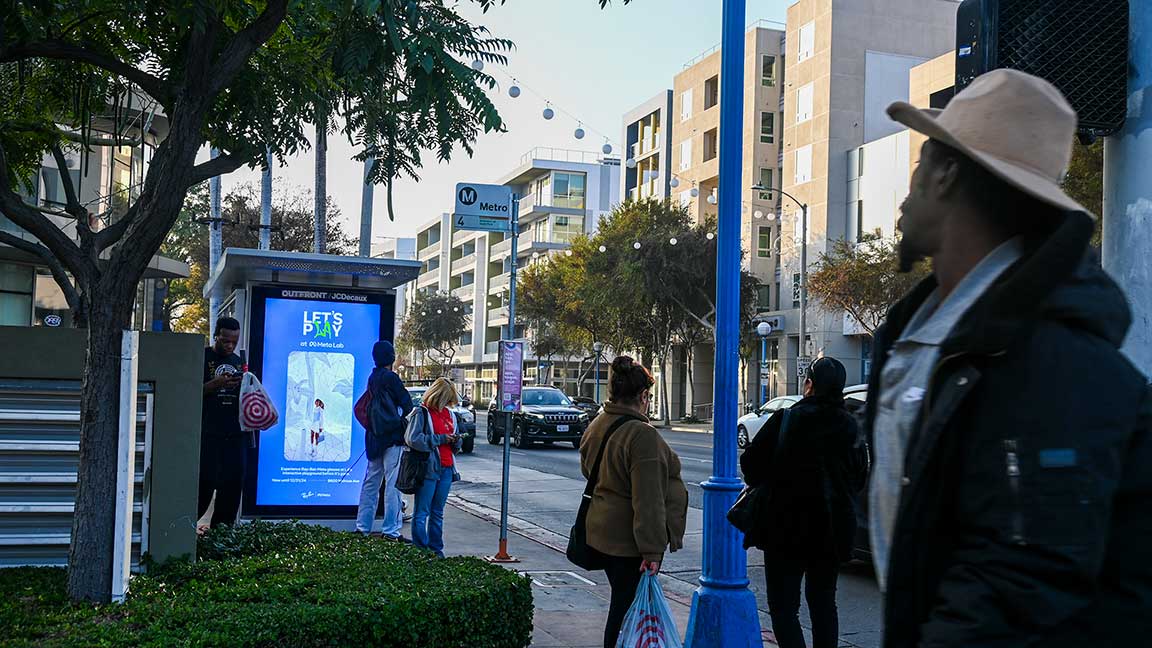
We did one last year for another product advertised during Sunday’s Big Game – Meta’s AI-powered smart glasses. Our kiosks and digital shelters in West Hollywood drove a 362% lift in visitation to the brand’s first experiential pop-up, where consumers could try on the glasses and discover the technology for themselves (SOURCEL Reveal Mobile).
Why the Least-Liked Super Bowl Advertisers Were Mostly Tech
But there were some Super Bowl ads that had people talking for all the wrong reasons. Out of the ten lowest-scoring ads of the day, six of them were for technology brands. Levi's Stadium represented a home-field advantage for Silicon Valley.
So why did so many AI and crypto brands miss the mark with their commercials?
It’s because outside the bubble of boosters, artificial intelligence is widely mistrusted. Only 5% of Americans say they trust AI a lot – and just 27% of consumers say that big tech companies have their best interest at heart (SOURCES: Gallup/Bentley University, Leo/Ipsos).
It’s trust these brands lack for, not attention. And the truth about Super Bowl advertising is, it’s not there to build trust. It’s there for stunts. It’s meant for gimmicks. It’s made for intercepting attention.
But there is a form of advertising uniquely positioned to build customer trust: IRL.
Trust is built in real life. It’s built by being present in the lives of your customers. And no other form of advertising gives brands a real physical presence in a world full of make-believe, every day of the year. That’s why AI brands embrace billboards and transit media so enthusiastically – especially in the Bay Area.
The Super Bowl is such coveted ad space because it’s one of the last shared cultural experiences we can enjoy at home.
The rest are found in real life.
If your brand is ready to be found in real life too, contact OUTFRONT today to get started!
Author: Jay Fenster, Senior Manager, Content Marketing @ OUTFRONT
Links to third-party content are not endorsed by OUTFRONT Media. Past performance may not be indicative of future results. OUTFRONT does not guarantee specific results or outcomes.
Relevant OOH Content Straight To Your Inbox
Essential out of home insights, trends, and success stories. Delivered weekly.