
Why the Rise of Artificial Intelligence Is Driving a Renaissance of the Real
May 12, 2026
When it comes to artificial intelligence, it can be challenging to tell what’s real. There’s a lot of hype out there, and brands that get caught up in it are playing with fire. How can AI brands – and brands that wish to use AI – protect themselves while taking advantage of the new opportunities the tech provides?
From Slopping to Shopping: How Consumers Encounter AI
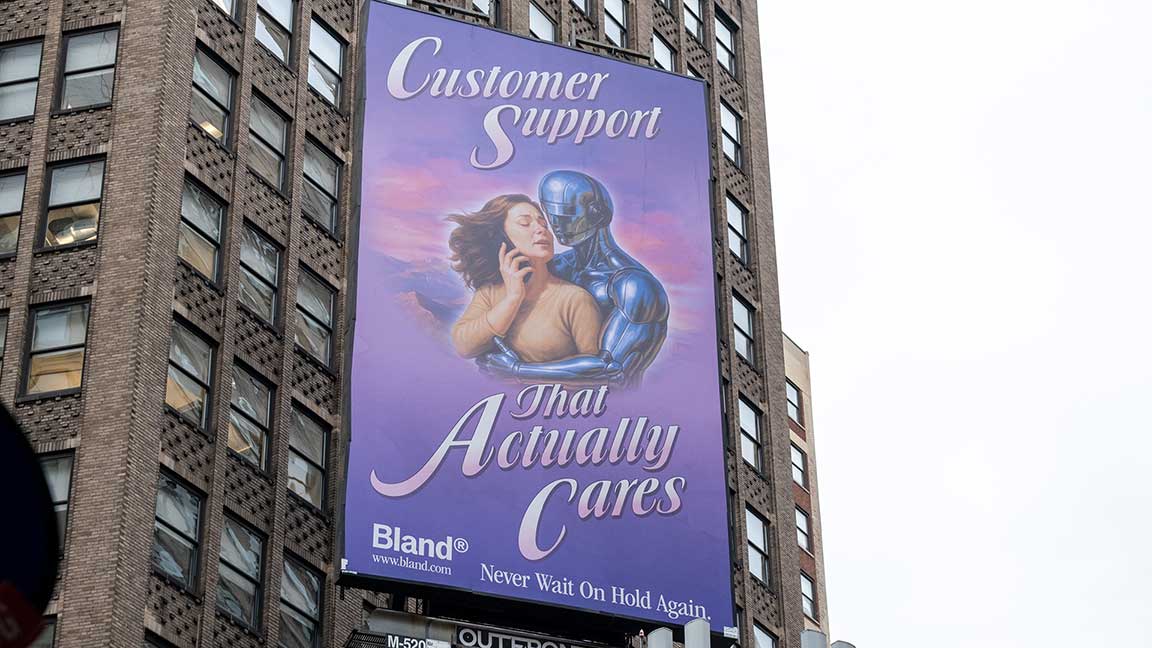
The first thing to understand is that AI-generated content is everywhere.
More than half of the new articles on the web are now AI-generated1. On digital platforms, the problem is even worse. Spotify had to delete 75 million AI-generated songs worth of slop last year2, and after YouTube was flooded with algorithm-gaming AI slop, its CEO stated that managing the problem is its top priority for 20263. TikTok, where there’s over 1.3 billion AI-generated videos, has already given users some control over how much of it shows up in their feed4
It’s no wonder that Merriam-Webster named “slop” its 2025 word of the year. But there’s one scenario where consumers are actually surprisingly receptive to AI-generated content: while shopping.
Nearly four in ten shoppers use AI, and nearly half of those who do, do so every time. Comparison shopping and product-specific questions are the most popular shopping tasks assisted by AI5.
Perhaps one reason for AI’s acceptance here is that implementations like review summaries are generated passively. But shoppers’ embrace of AI is not universal across the board. Personalized recommendations are not catching on as quickly, and trust is a big reason why. Just 36% of consumers say they trust AI-generated shopping recommendations. But when those decisions are explained, that number rises to 66%6.
The Productivity Paradox and the Trust Gap
n the B2B side, the picture is also mixed. While OpenAI claims that the average ChatGPT Enterprise user saves 40 to 60 minutes daily, there’s reason to be skeptical of the claim7.
A recent WSJ survey revealed that 40% of workers who use AI save no time at all, while PwC’s annual CEO survey revealed that 56% of companies are seeing no cost or revenue benefits at all8,9. And just in the last few weeks the National Bureau of Economic Research discovered that nearly 90% of companies implementing AI have seen no impact on employment or productivity10, in part due to the ease of creating “workslop” time-sinks that recall economist Robert Solow’s productivity paradox, first observed in 1987 alongside the advent of personal computers.
The distance between the promises of AI boosters and the reality of what the technology can do has opened up a trust gap. Only 5% of us trust AI a lot. 68% say the information it generates isn’t trustworthy, and 71% are concerned about the lack of clarity in how AI systems collect and use personal data11,12,13.
The externalities of AI are hard to ignore, from higher power bills to PC hardware shortages. And its deeply-embedded penchant for hallucination is another reason why consumers are wary of using the tech. Data centers’ impact on communities is another big reason. In fact, local opposition has derailed or delayed $98 billion worth of data center projects nationwide in Q2 of last year14.
Besides those negative consequences, there’s also the impact AI makes on the minds of those who use it. A study by the MIT Media Lab revealed that “LLM users consistently underperformed at neural, linguistic, and behavioral levels.” The study describes “an accumulation of cognitive debt” and “low effort, mostly copy-paste” output.
Even worse, reliance on artificial intelligence has the potential to make use worse at being real humans. The majority say that people’s ability to do things on their own will suffer from using AI15. Overwhelmingly we fear that it’ll make us worse at things like thinking creatively, forming meaningful relationships, making difficult decisions, and solving problems16.
And then there’s the psychosis. 560,000 ChatGPT users show signs of psychosis or mania each week, and AI companion products have been implicated for their role in 11 suicide deaths17,18.
The Way Forward for AI Is Earning Trust

We’re at the point where we need to figure out how we want AI to fit into our lives and where we want it to fit.
And at the end of the day, our relationship with artificial intelligence comes down to trust. It’s an uphill battle for AI brands, but not an insurmountable one. There is a path forward.
To earn trust, brands selling AI can emphasize three important pillars of trust: transparency, explainability, and human involvement. 62% say they’d have more trust in brands that are transparent about their use of AI. 83% would trust AI more if it could explain its reasoning or decisions. And 78% would trust it more with humans in the development loop19.
There’s no denying that artificial intelligence is powerful, or that it’s rapidly changing the world around us. But whether or not “AI is here to stay?” That depends on closing the trust gap.
One way that AI startups have been addressing the trust gap has been to establish a tangible real-world presence with IRL media formats like billboards and subway posters. That physical presence builds more than name recognition – it tells your audience that you’re credible. It communicates that you’re serious, you’re dependable, and worthy of their trust.
After all, in a world where everything seems fake, nothing wins like getting real. If you’d like to learn more about why real wins in artificial times, grab a copy of OUTFRONT’s 2026 Advertising Trends Report. The report covers consumer trends, the advertising media landscape, and artificial intelligence – and it shows how IRL media connects with consumers in ways online formats cannot match.
This article originally appeared on GEMA.com.
Sources
- Graphite.io
- Spotify
- Yahoo! News
- TikTok
- IAB
- CapGemini
- OpenAI
- Wall Street Journal
- PwC
- National Bureau of Economic Research
- Gallup/Bentley University
- NAB
- Ipsos/Leo
- Data Center Watch
- MIT Media Lab
- Pew Research
- The BMJ
- Public Citizen
- RWS
Author: Jay Fenster, Senior Manager, Content Marketing @ OUTFRONT
Links to third-party content are not endorsed by OUTFRONT Media. Past performance may not be indicative of future results. OUTFRONT does not guarantee specific results or outcomes.

Relevant OOH Content Straight To Your Inbox
Essential out of home insights, trends, and success stories. Delivered weekly.
Related Stories
See More Stories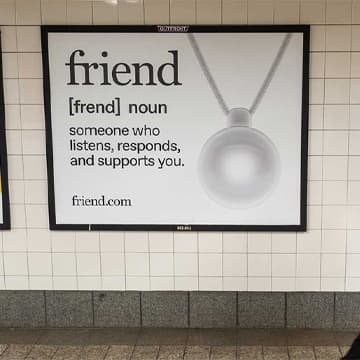
Purchasing the Zeitgeist – Why IRL Out of Home Advertising Is a Real Friend to AI Startups
What Are 2026’s Top Consumer Trends? Insights from OUTFRONT’s New Advertising Trends Report

These Are the Top Media Trends for 2026 from OUTFRONT’s New Advertising Trends Report

Imagine If Brands and Their Audiences Could Co-Create Entire Worlds Together With GenAI