
Why the Rise of Run Clubs Means IRL Opportunity for Brands
July 29, 2026
For years, running was viewed as an individual pursuit. Lace up, head out the door, and log a few miles alone. Today, that picture looks very different.
Across cities and towns, run clubs have become one of the fastest growing social activities, bringing people together in parks, outside local coffee shops, and at neighborhood running stores. While fitness remains part of the appeal, many people are showing up for something else entirely: connection.
More Than Just Exercise, Running is Life
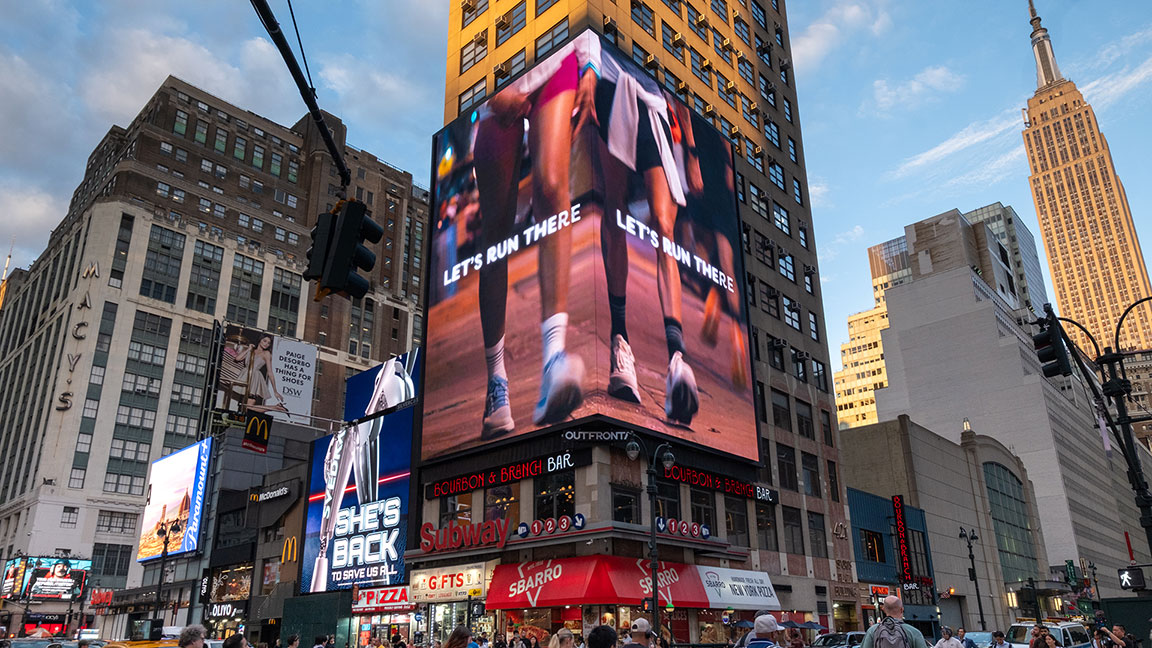
What begins as a weekly group run often evolves into something bigger.
A first run club meeting can lead to training for a local 5K. Casual running partners become accountability buddies. Individual fitness goals turn into shared milestones celebrated by an entire community.
Run clubs are becoming modern gathering places. They offer people a chance to disconnect from screens, build community, and share experiences with others. In many ways, they are filling a role once occupied by bars, clubs, and other traditional social spaces.
As consumers spend more of their lives online, they are increasingly seeking opportunities to engage with others in person. More than nine in ten young run club members said they formed meaningful relationships through their club, including friendships, stronger social bonds, and even romantic relationships. Nearly all respondents, 97%, reported improved wellbeing after joining (SOURCE: Brooks Running).
The trend extends beyond running itself. Strava’s latest Year in Sport report found that running clubs grew 3.5x year over year. The report also found that consumers, particularly younger generations, are increasingly choosing active, real-world experiences over passive scrolling.
For brands, this shift matters. As consumers intentionally seek out in-person experiences, the places where they gather are becoming increasingly valuable environments for engagement.
Why IRL Advertising Helps Brands Find Their Stride
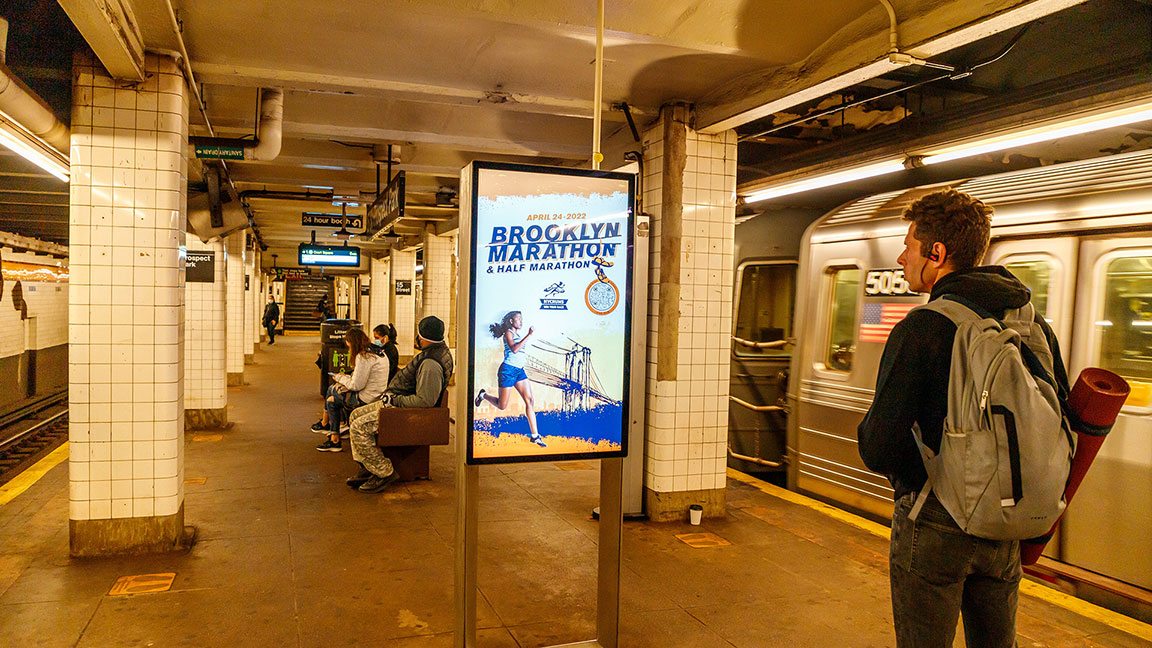
As consumers prioritize experiences that take place in the physical world, IRL advertising is uniquely positioned to meet them there.
Unlike digital advertising, which competes for attention on a screen, IRL advertising – aka out of home – exists within environments where these experiences unfold. It is part of the commute to a morning run, the route to a race starting line, and the city streets where communities gather to celebrate achievement.
This is particularly relevant in fitness because participation is inherently physical. People are not simply consuming content about running. They are actively moving through their communities. As they travel to weekly run clubs, train for races, and participate in large-scale events, they create natural touchpoints for brands to engage with them in meaningful ways.
Those touchpoints can also drive measurable results. When NYCRUNS promoted the Brooklyn Marathon and Half Marathon, its strategically placed subway and street-level out-of-home advertising reached people where they were already commuting and training. During the 60-day campaign, the race saw a surge of 10,000 registrations. More than 2,200 people scanned QR codes on the ads, and over 1,200 attendees reported learning about the race through subway advertising (SOURCE: NYCRUNS).
Rather than asking people to seek out information, the campaign met future participants where they already were, demonstrating how IRL advertising can build awareness while driving action.
The most effective campaigns do more than generate visibility. They contribute to experience itself.
Bank of America Goes the Distance for Boston Marathon Runners
Whether it is a neighborhood race, a half marathon, or a major city marathon, these events bring together far more than runners alone. Participants, volunteers, spectators, local businesses, and entire communities become part of the experience.
For a few hours, cities transform. Streets close to traffic and open to thousands of participants. Sidewalks fill with supporters cheering on friends and family members. Transit systems move runners and spectators to start lines and finish areas. Entire neighborhoods become part of the event.
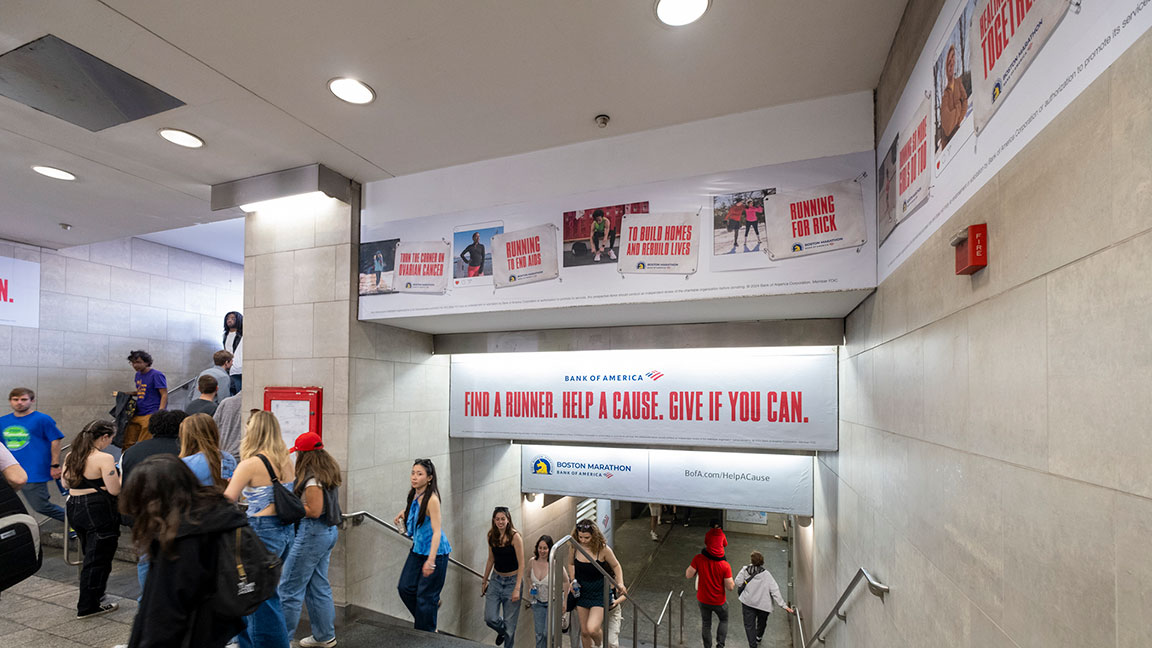
Bank of America’s Boston Marathon campaign offers a compelling example of how brands can maximize the value of an official sponsorship through IRL advertising. As the race’s presenting sponsor, Bank of America already had a prominent role in one of the country’s most recognizable sporting events. Rather than limiting that partnership to logos, signage, and race-day branding, the company used its “Human Sponsorship” initiative to extend the impact of its sponsorship throughout the city while supporting the people who help make the marathon possible.
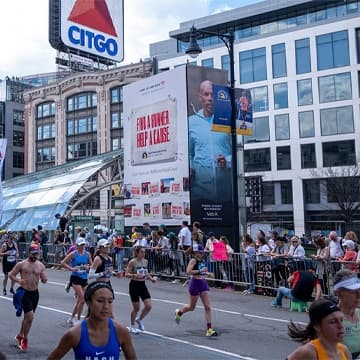
Instead of placing the spotlight on itself, Bank of America used more than 600 IRL media displays across Boston to tell the stories of charity runners and the causes they supported. The campaign appeared in high-traffic locations, including along the marathon route and throughout the MBTA transit system, allowing spectators and commuters to engage with the event beyond race day. QR codes on the ads directed people to runners’ fundraising pages, transforming the brand’s physical presence into an opportunity to drive real community impact.
The results demonstrated the value of combining official sponsorship with IRL media. Charity runners raised a record $71.9 million for 168 nonprofit organizations, a 77% increase from the previous year, while Bank of America also saw a 5.7% lift in brand favorability (SOURCE: Bank of America). Rather than simply increasing brand visibility, the campaign showed how IRL advertising can amplify an official sponsorship by strengthening the connection between a brand, an event, and the community it serves.
That approach reflects a broader truth about today’s consumers. People are increasingly drawn to experiences that feel authentic, participatory, and community driven. The brands that resonate are often the ones that show up in support of those moments.
These moments demonstrate something increasingly valuable in today’s digital-first world. People still crave experiences that happen in real life.
Why We Run, and Why Brands Should Care
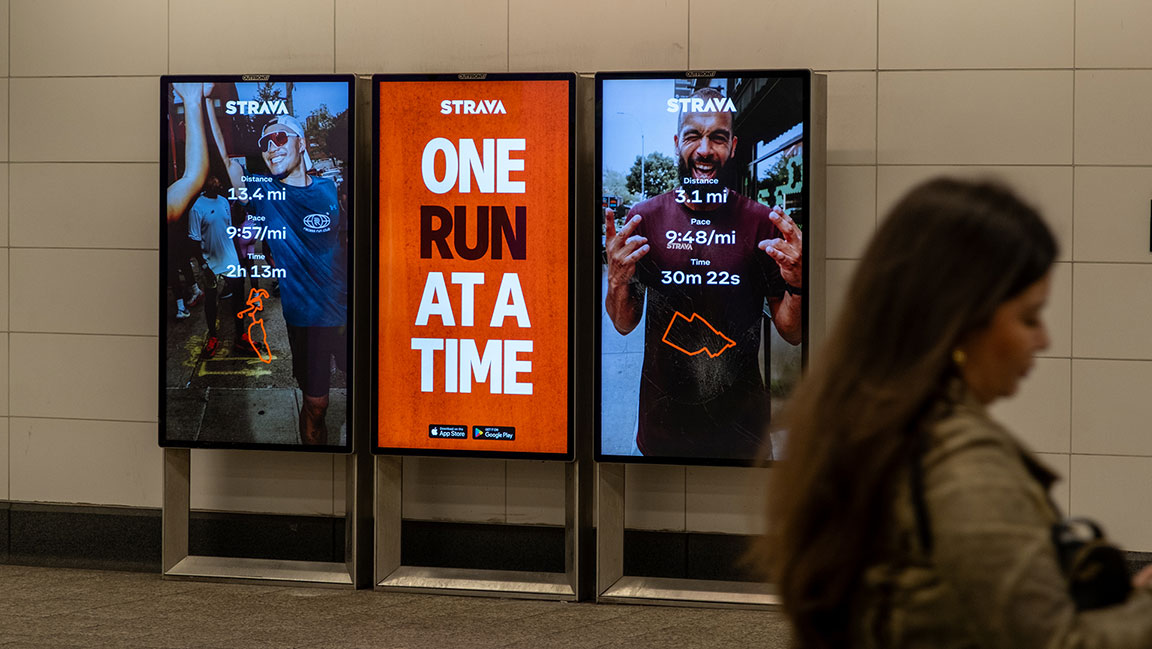
The rise of run clubs is more than running.
It reflects a broader cultural movement toward real-world connection. As consumers seek experiences that bring them together offline, they are creating new communities centered around shared interests, goals, and experiences.
For brands, these moments represent more than an audience. They represent an opportunity to become part of the experience itself. Whether through sponsoring local races, supporting community initiatives, or using IRL advertising to enhance major events, brands can create meaningful connections by contributing to the moments that bring people together rather than simply advertising alongside them.
Whether it is a Tuesday night group run, a local 5K, or a marathon that transforms an entire city, these experiences remind us that some of the most meaningful connections still happen face-to-face. The brands that leave a lasting impression are often the ones that show up in support of those moments, strengthening the communities that make them possible.
As consumers continue to prioritize shared experiences, IRL advertising will remain uniquely positioned to help brands become part of the places, people, and events that matter most.
Want to impact those people, places, and events? Contact us today.
Author: Adriana Zelayandia, Marketing Intern @ OUTFRONT
Links to third-party content are not endorsed by OUTFRONT Media. Past performance may not be indicative of future results. OUTFRONT does not guarantee specific results or outcomes.
Relevant OOH Content Straight To Your Inbox
How to Win the Boston Marathon: Bank of America Takes Grand Prize in OAAA Local Media Plan Awards

MLB Game Days Stretch Official Sponsorships Outside the Stadium
Meet the MTA: A Guide to New York Transit Advertising, Part 1: NYC Subway Advertising

Wicked Smart Advertising: Spotlight on IRL Media in Boston